Our years of experience and extensive network of local partners can help you build your dream trip from the endless possibilities of Ethiopia. We’ll talk through your ideas, give you some suggestions, set it all up and advise on travel, kit and preparation, so that you get the Ethiopian adventure you’ve always wanted.


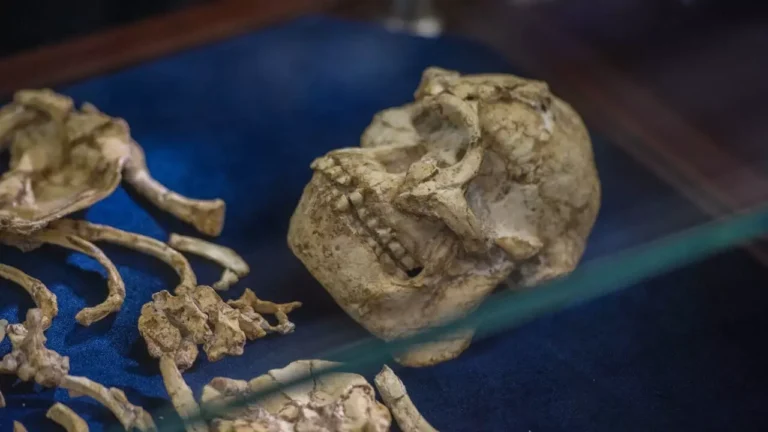
Ethiopian Fossils Reveal a New Species in the Human Evolutionary Lineage
Ethiopian Fossils have played an important role in helping scientists understand the long and complex story of human evolution. Ethiopia is one of the world’s most important locations for paleoanthropological research, with ancient fossil sites that have produced remarkably well-preserved remains of early humans and their relatives.
From the dry landscapes of the Afar Depression to other ancient geological formations across the country, Ethiopia has provided researchers with evidence dating back millions of years. These discoveries have helped scientists investigate how early hominins lived, moved, adapted to changing environments, and developed characteristics that eventually became important in human evolution.
For travelers interested in history, science, archaeology, and human origins, Ethiopia offers a unique opportunity to explore some of the places connected with the earliest chapters of our evolutionary story.
Why Is Ethiopia Important to Human Evolution?
Ethiopia occupies a special position in the study of human origins because its geological formations preserve evidence from different periods of the evolutionary record. Millions of years ago, parts of the region had lakes, rivers, forests, and grasslands that provided suitable environments for early hominins.
Over time, volcanic activity and sedimentation buried and preserved bones, teeth, footprints, and other evidence. Scientists can study these remains together with the surrounding geological layers to determine their approximate age and understand the environments in which ancient species lived.
The country’s fossil record has therefore become an important source of information for researchers studying the development of the human family.
Famous Fossil Discoveries in Ethiopia
Ethiopia is associated with some of the most famous discoveries in paleoanthropology. One of the best known is Lucy, a remarkably preserved skeleton of Australopithecus afarensis discovered in the Afar Region in 1974.
Lucy lived more than three million years ago and became one of the most famous early human ancestors ever discovered. Her skeleton provided important evidence about the anatomy and movement of early hominins.
Other discoveries from Ethiopia have also expanded scientific understanding of species that lived before and alongside later members of the human evolutionary lineage.
Together, these finds demonstrate that human evolution was not a simple, straight progression from one species to another. Instead, different hominin species lived at different times and sometimes shared the same broad geographical regions.
The Afar Depression and Fossil Research
The Afar Depression is one of the most important areas for studying ancient human evolution. Located in northeastern Ethiopia, the region is known for its harsh modern environment, volcanic landscapes, salt flats, and extremely hot temperatures.
Despite its difficult conditions today, the area contains geological formations that preserve evidence from ancient environments.
Researchers have conducted extensive excavations in the region, uncovering fossils and archaeological materials that help reconstruct the history of life in eastern Africa.
The Afar region is particularly valuable because different layers of sediment represent different periods of geological time. By examining these layers, scientists can build a chronological picture of species and environmental changes.
What Do Fossils Tell Scientists?
Ancient bones and teeth can provide information about the physical characteristics of extinct species. Scientists can examine the shape and structure of fossil remains to determine how different species may have been related.
Teeth can reveal information about diet, while bones can provide clues about body size and movement. The condition and location of fossils can also help researchers understand the environment in which an animal lived.
Fossils can therefore answer questions such as:
-
What did ancient hominins look like?
-
How did they move?
-
What foods might they have eaten?
-
Where did they live?
-
How did they adapt to environmental changes?
-
How were different species related?
When fossil evidence is combined with geological and archaeological information, researchers can develop a more detailed picture of the ancient world.
New Discoveries and the Human Evolutionary Lineage
Scientific research continues to reveal new information about the diversity of early hominins. Discoveries in Ethiopia and other parts of eastern Africa demonstrate that several human-related species existed over millions of years.
Some fossil remains have characteristics that do not fit neatly into previously known species. Researchers may therefore study them carefully to determine whether they represent a known population, a variation within an existing species, or potentially a previously unidentified species.
Such discoveries are important because they show that human evolution was complex and involved numerous branches.
New findings can also change scientific interpretations. As more fossils are discovered and better dating and analytical techniques become available, researchers can compare evidence from different sites and develop improved theories about how ancient populations were related.
Ethiopia’s Contribution to Paleoanthropology
The importance of Ethiopian fossil discoveries extends far beyond the country itself. Evidence from Ethiopia is studied by researchers from universities, museums, and scientific institutions around the world.
The country’s discoveries have contributed to discussions about when early hominins appeared, how they adapted to their environments, and how different species may have interacted with changing landscapes.
Ethiopian fossil record also demonstrates the importance of Africa in the broader story of human origins. Many important discoveries from eastern Africa have helped establish the region as a central area for research into early human evolution.
Visiting Ethiopia’s Fossil and Archaeological Sites
Although many important fossil specimens are preserved in museums and scientific collections, travelers can visit several regions associated with Ethiopia’s archaeological and paleoanthropological heritage.
The Afar region is particularly significant for understanding the country’s ancient geological history. Visitors interested in archaeology and natural history can also explore museums and cultural institutions in Addis Ababa, where important Ethiopian discoveries and historical materials may be displayed.
Travel conditions in some fossil-rich areas can be challenging, so visitors should plan carefully and travel with experienced local guides or tour operators when visiting remote regions.
Why Ethiopian Fossils Matter Today
The study of ancient remains is not simply about discovering old bones. Fossils provide evidence that allows scientists to investigate how life changed over enormous periods of time.
Ethiopian discoveries are particularly valuable because they contribute to our understanding of the evolutionary history of one of the world’s most fascinating species: modern humans.
They also demonstrate how landscapes have changed. Regions that are extremely dry today once contained very different environments, including lakes, forests, and grasslands. Understanding these environmental changes can help scientists examine how ancient species responded to climate and habitat changes.
Ethiopia and the Story of Human Origins
Ethiopia’s contribution to the study of human evolution has made the country an important destination for researchers and travelers interested in archaeology, anthropology, and natural history.
From Lucy and other famous discoveries to ongoing scientific research, the country’s ancient landscapes continue to provide clues about our distant past.
The story is far from complete. New excavations, improved dating methods, and advances in scientific analysis may reveal additional information about the species that lived in Ethiopia millions of years ago.
For anyone interested in human origins, visiting Ethiopia provides an opportunity to connect the country’s extraordinary landscapes with one of the greatest scientific stories ever investigated—the story of how humans evolved.
Frequently Asked Questions About Ethiopian Fossils
Why are Ethiopian fossils important?
They provide important evidence about early hominins and help scientists understand human evolution, ancient environments, and the relationships between different species.
Where have important fossils been discovered in Ethiopia?
Many significant discoveries have been made in the Afar region, particularly around the geological formations of the Afar Depression.
Who was Lucy?
Lucy is the famous fossil skeleton of Australopithecus afarensis discovered in Ethiopia in 1974. She lived more than three million years ago and became an important discovery in the study of human evolution.
Can tourists visit fossil sites in Ethiopia?
Some regions associated with fossil discoveries can be visited, although remote areas may require special planning, transportation, permits, and experienced guides. Museums in Addis Ababa also provide opportunities to learn about Ethiopia’s paleoanthropological heritage.
Are new fossil discoveries still being made?
Yes. Researchers continue to conduct fieldwork in Ethiopia and other parts of Africa, and new discoveries can provide additional information about ancient species and human evolution.
Ethiopia — often called the “Cradle of Humankind” — continues to rewrite the story of our origins. Recent fossil discoveries in the country’s ancient rift valleys have unveiled evidence of a new species within the human evolutionary lineage, reinforcing Ethiopia’s central role in understanding how early humans evolved and spread across the world.

A Landmark Discovery
Archaeologists working in the Afar Region, an area already famous for the discovery of Australopithecus afarensis (“Lucy”), unearthed a remarkably well-preserved jawbone and teeth estimated to be around 3.3 million years old. The fossils belong to a previously unknown species of early hominin that lived alongside Lucy, suggesting that multiple human ancestors once coexisted in East Africa.
This groundbreaking find bridges an important gap between Australopithecus afarensis and earlier species such as Australopithecus anamensis. The new species shows a combination of primitive and more advanced traits, shedding light on how the human face and jaw gradually evolved toward modern forms.
Ethiopia: The Birthplace of Humanity
Ethiopia’s Great Rift Valley is one of the richest paleoanthropological regions on Earth. Over the past five decades, scientists have discovered fossils here that represent nearly every stage of human evolution, from early ape-like ancestors to the emergence of Homo sapiens.
Key sites like Hadar, Aramis, and Omo Kibish have yielded iconic finds — including Lucy, Ardi (Ardipithecus ramidus), and the earliest known remains of modern humans.
Why It Matters
The discovery of a new human ancestor in Ethiopia not only fills crucial gaps in the fossil record but also reinforces the country’s importance in understanding our shared heritage. It reminds us that the story of humanity began here, on the high plateaus and valleys that continue to yield secrets millions of years later.
Visit the Land of Origins
Travelers can explore Ethiopia’s National Museum in Addis Ababa, home to replicas and fossils of Lucy and other early hominins, or journey to the Afar Depression, where the bones of our ancestors still emerge from the earth. For science enthusiasts, Ethiopia offers a rare opportunity to stand where humankind first walked.

