Our years of experience and extensive network of local partners can help you build your dream trip from the endless possibilities of Ethiopia. We’ll talk through your ideas, give you some suggestions, set it all up and advise on travel, kit and preparation, so that you get the Ethiopian adventure you’ve always wanted.


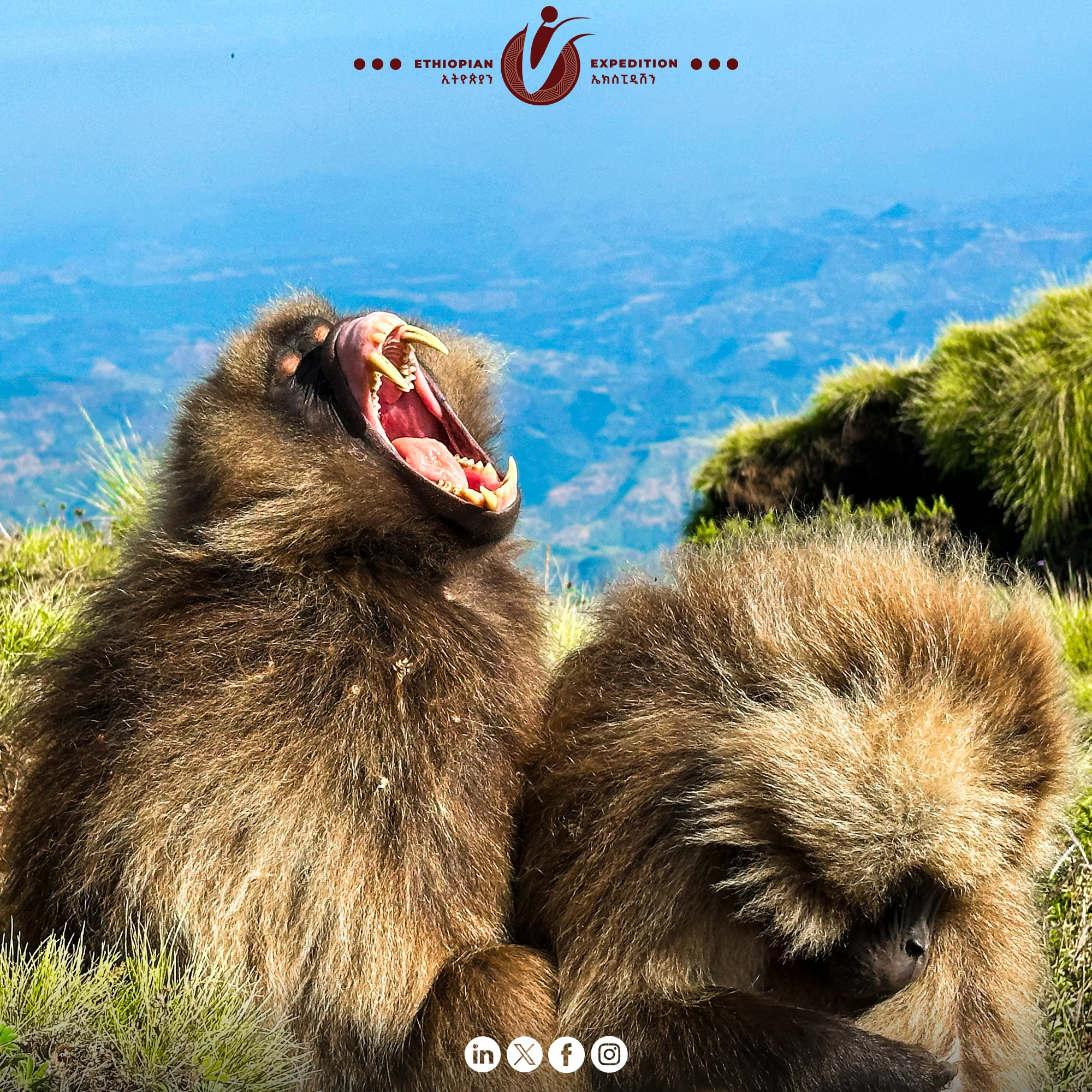
Gelada Baboon is one of Ethiopia’s most remarkable wildlife species, known for its distinctive appearance, complex social behavior, and life in the country’s high-altitude grasslands. Unlike many other African primates, the gelada spends much of its time on the ground, feeding mainly on grasses and other vegetation.
Found only in the Ethiopian Highlands, these fascinating animals are particularly associated with areas such as the Simien Mountains. Their large social groups, expressive faces, and unique behaviors make them an unforgettable sight for wildlife enthusiasts, photographers, and travelers exploring Ethiopia.
The gelada is sometimes called the “bleeding-heart monkey” because of the distinctive reddish patch of skin on its chest. Despite the nickname, geladas are not true baboons; they belong to their own genus and are specially adapted to life in Ethiopia’s mountainous environments.
This guide explores the gelada baboon’s appearance, habitat, diet, behavior, social structure, conservation, and the best places to see these remarkable animals in Ethiopia.
is one of the most fascinating wildlife attractions in the Ethiopian Highlands. Also known as the bleeding-heart monkey, the Gelada is a unique primate found naturally in Ethiopia. These remarkable animals are famous for their distinctive red chest patches, thick golden-brown fur, social behavior, and ability to live in large groups across high-altitude grasslands.

Where Do Gelada Baboons Live in Ethiopia?
Gelada monkeys are naturally found in the highland regions of Ethiopia, particularly in areas with steep cliffs and open grasslands.
One of their most famous habitats is Simien Mountains National Park, a UNESCO World Heritage Site in northern Ethiopia. The park provides an excellent environment for Geladas because of its high-altitude plateaus, mountain slopes, and natural grasslands.
Other populations can be found in different parts of the Ethiopian Highlands, including areas around the central and northern highlands.
Their natural habitat is characterized by cool temperatures, open vegetation, rocky landscapes, and steep escarpments. These environments provide suitable feeding grounds and safe places where Geladas can sleep on cliffs.
Why Is the Gelada Called the Bleeding-Heart Baboon?
One of the most distinctive features of the Gelada is the red patch of bare skin located on its chest.
The patch is usually more noticeable in males and can become brighter depending on their physical and reproductive condition. Females also have chest patches, which may display different characteristics.
This unusual marking is responsible for the nickname “bleeding-heart monkey.”
Their thick golden-brown fur, expressive faces, and unique chest markings make Geladas among the most recognizable primates in Africa.
Diet and Feeding Habits
Unlike many other monkeys and baboons, Geladas have a diet consisting mainly of grass.
They spend several hours each day sitting on the ground and pulling grass blades with their fingers. They also eat seeds, roots, flowers, and other plant materials depending on seasonal availability.
Their feeding behavior is particularly interesting because they use their hands with remarkable precision to select and collect food.
Geladas are sometimes called grazing primates because of their strong dependence on grassland vegetation. Their feeding habits make them especially well adapted to the open highland environments of Ethiopia.
Social Life and Group Behavior
Geladas are highly social animals that live in organized groups. Their communities can contain several family units and may consist of dozens or even hundreds of individuals.
They communicate through facial expressions, body movements, and a wide variety of vocal sounds.
Grooming is an important social activity that helps strengthen relationships between members of the group. It also helps maintain social connections and reduce tension.
Male Geladas may compete for leadership and access to females, while females often maintain strong social relationships within their family units.
Watching their interactions in the wild is one of the highlights of a Gelada wildlife experience.
Best Time to See Gelada Monkeys in Ethiopia
Geladas can be observed throughout the year in suitable habitats, although weather and visibility can influence the wildlife viewing experience.
The dry season, generally from October to February, is often a convenient period for visiting the Simien Mountains. Trails may be easier to navigate, and mountain views can be clearer.
The rainy season brings greener landscapes and different photographic opportunities, although heavy rainfall and cloudy conditions may affect travel plans.
Early morning is often a good time to observe Geladas because they are active during daylight hours and can be seen feeding and interacting in their groups.
Wildlife Photography and Travel Tips
The Gelada baboon provides excellent opportunities for wildlife photography because of its distinctive appearance and social behavior.
Visitors interested in photographing these animals should bring a camera with a suitable zoom lens. Patience is important because the best photographs often come from observing the animals quietly without disturbing their activities.Conservation and Threats to Gelada Baboons
Although Geladas are still found in several areas of Ethiopia, their natural habitats face environmental pressures.
Habitat loss, agricultural expansion, human settlement, and competition for grazing land can affect the environments where these animals live.
Protecting the Ethiopian Highlands is important for maintaining healthy Gelada populations and preserving the biodiversity of the region.
National parks, conservation programs, responsible tourism, and local community participation all contribute to protecting Ethiopia’s remarkable wildlife.
Visitors can support conservation by following park guidelines, respecting wildlife, and choosing responsible tour operators.
From watching large groups of Geladas grazing across mountain grasslands to enjoying the dramatic scenery of Simien Mountains National Park, this experience offers a special opportunity to discover Ethiopia’s natural heritage.
Ethiopian Expedition organizes travel experiences to Ethiopia’s remarkable natural and cultural destinations. Whether you are interested in wildlife photography, mountain trekking, or exploring the country’s national parks, our team can help you plan your journey.
Contact Ethiopian Expedition to discover the Simien Mountains and experience the fascinating wildlife of Ethiopia.
Meet the Ethiopian Gelada (Theropithecus gelada), affectionately known as the “bleeding-heart monkey.” These fascinating primates are unique to the Ethiopian Highlands, particularly the Simien Mountains, where they thrive in the steep grasslands and rocky cliffs that rise above 3,000 meters.
Unlike most primates, Geladas spend their entire lives on the ground rather than in trees. Much like humans, they live in large, complex social groups and are often seen sitting together, grooming, and even “chatting” — a behavior scientists describe as remarkably similar to human conversation patterns.
Their nickname, bleeding-heart monkey, comes from the distinctive hourglass-shaped red patch of bare skin on the chests of males — a striking symbol of dominance and health. Another fascinating adaptation is their thick, fatty seat pads, perfectly designed for long hours of sitting and socializing on the rugged mountain slopes.
With their golden manes, expressive faces, and intricate social dynamics, Geladas are not only a wildlife photographer’s dream, but also a symbol of Ethiopia’s unique biodiversity.
Fun Facts
- Geladas are the only grazing primates, feeding primarily on grass and roots.
- Their “chatter” includes over 30 distinct vocalizations.
- Adult males can sport a mane that rivals a lion’s!
Observing Gelada monkeys in their natural environment is an unforgettable experience for visitors to Ethiopia. From their unusual feeding habits to their fascinating social behavior, these primates offer a unique wildlife experience. Ethiopian Expedition can help you discover the Simien Mountains and explore Ethiopia’s remarkable natural heritage.

